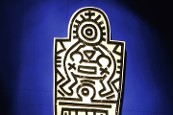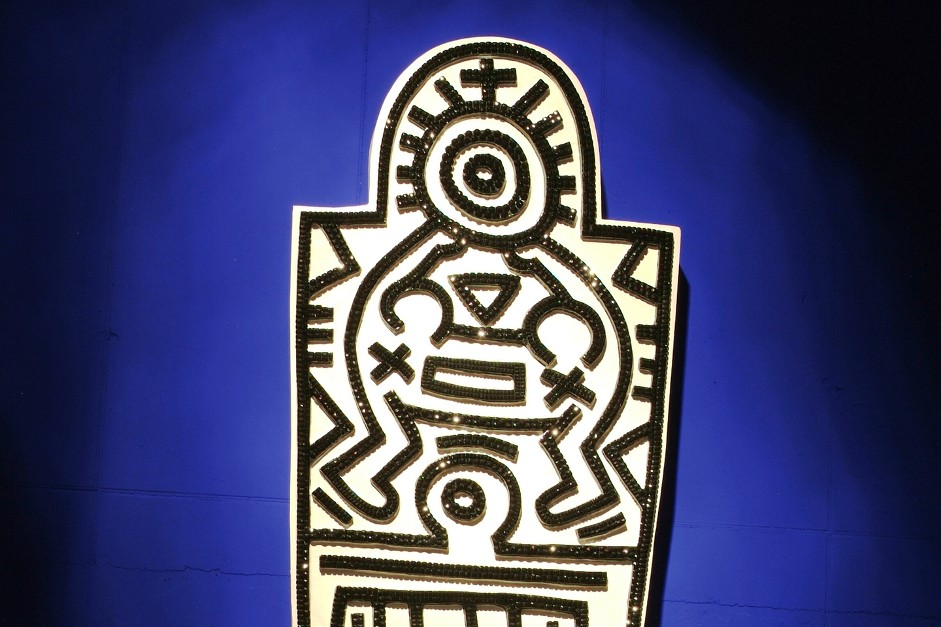
Die kreuzförmige Stele von Keith Haring, einem der bedeutendsten Pop-Art-Künstler der 1980er Jahre, wurde für die Premiere von „Aida“ in der Sahara im ägyptischen Luxor kreiert. 1987 wurde dort Giuseppe Verdis Oper am Originalschauplatz mit international gefeierten Opernstars wie Jessye Norman und Plácido Domingo uraufgeführt. Die mit schwarzen Swarovski Kristallen besetzte Stele existierte zweimal und war Teil der spektakulären Bühnendekoration. Nach dem Tod von Keith Haring erwarb André Heller beide Stelen, wobei eine heute in den Swarovski Kristallwelten zu sehen ist und die andere im Garten von André Heller selbst ihren Platz gefunden hat.

Keith Haring wurde 1958 in Kutztown, Pennsylvania, geboren und zählt zu den bekanntesten Pop-Art-Künstlern der Welt. Nach seinem Studium an der School of Visual Arts (New York) ließ er sich als freischaffender Künstler nieder und entwickelte eine fantasievolle Ausdrucksform im Graffiti-Stil, die ihm rasch internationale Anerkennung einbrachte. Er bemalte unter anderem die Berliner Mauer am Checkpoint Charlie, kreierte Bodypaintings für Grace Jones und entwarf Straßenmarkierungen in Tokio. Ende der 1980er Jahre erkrankte er an Aids und versuchte fortan, die sozialen Folgen der Krankheit in seiner ureigenen Bildsprache darzustellen. Keith Haring starb am 16. Februar 1990 in New York.