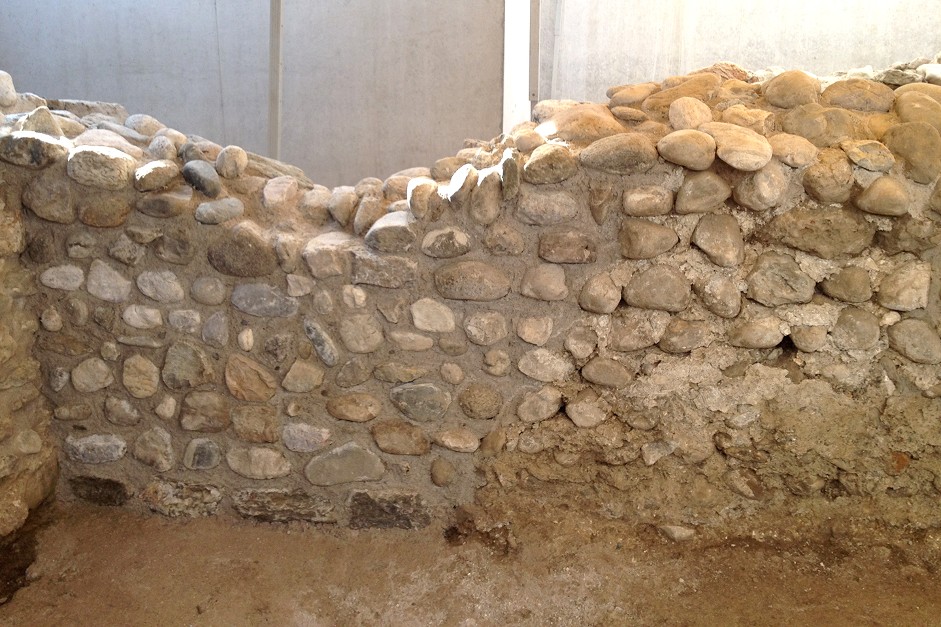
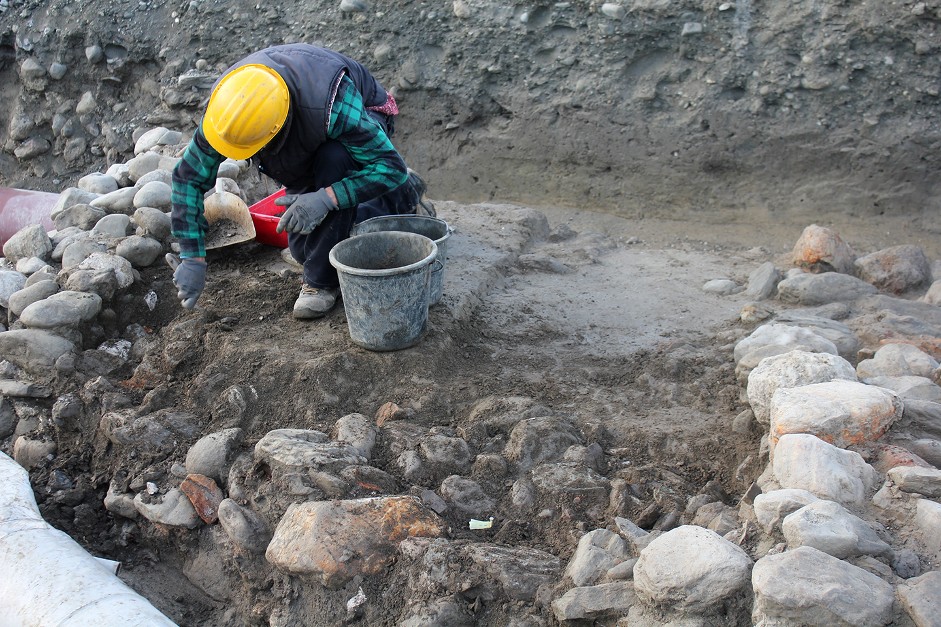
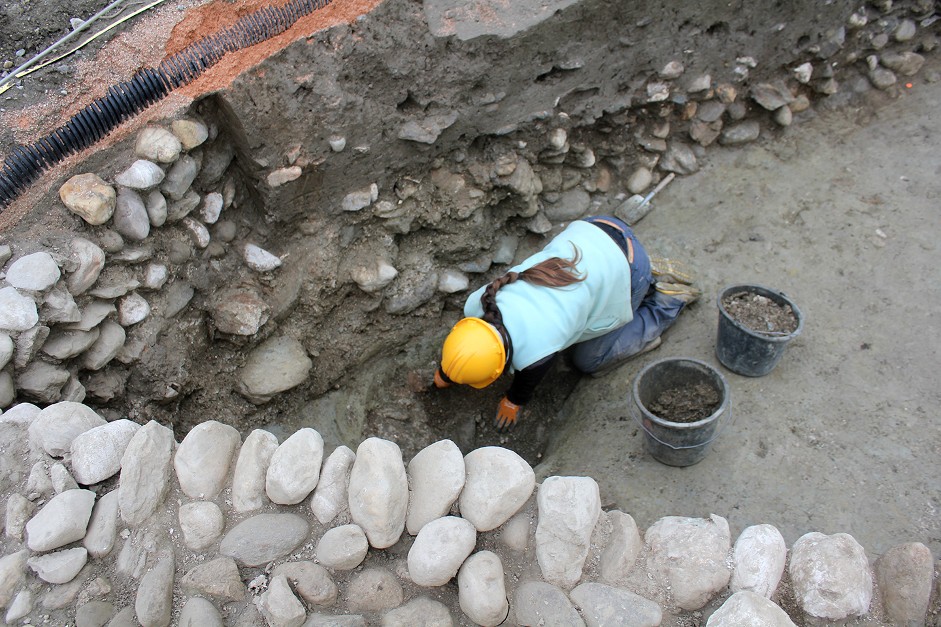
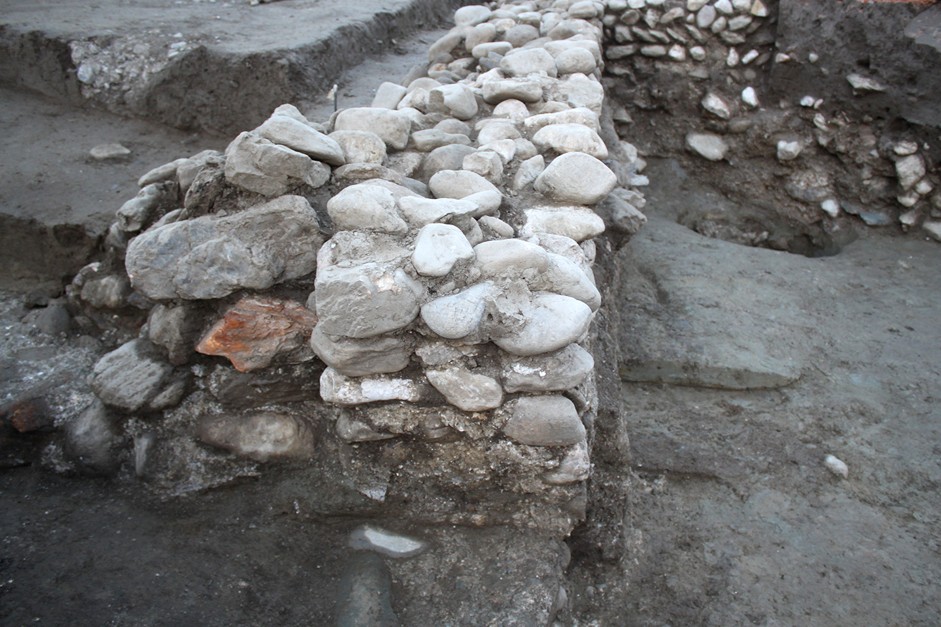
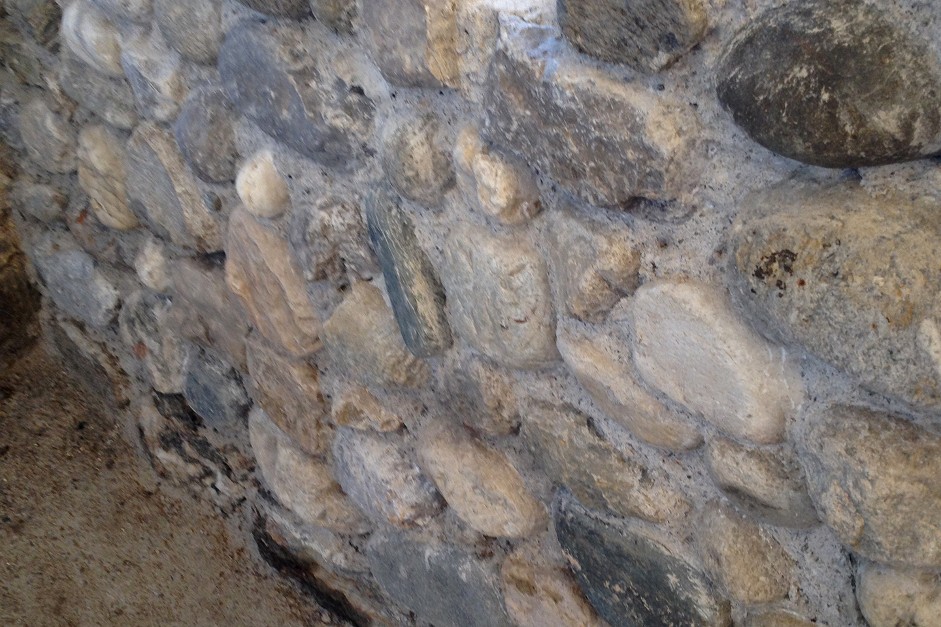
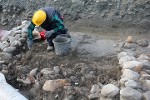
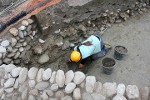
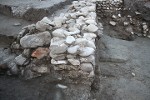

These building parts were unearthed in an excavation and later restored. They comprise two rooms that are oriented northwest-southeast. The surviving stonework is embedded into the ground. Lime mortar was used as a bonding agent between the river and quarry stones. The walls are still standing up to a height of almost 1.10 meters, with the top of the wall showing the level that was once the walkway. The more extensive room measures 8 meters and was accessible via an opening with a threshold on the western side. The smaller, adjacent room measures three by two meters and was used as an additional entrance area.The walls were probably part of a Roman country estate (villa rustica). This type of property was usually close to a road and consisted of several buildings including a dwelling, an outbuilding and stable, farm buildings, a smithy, and a bathhouse.
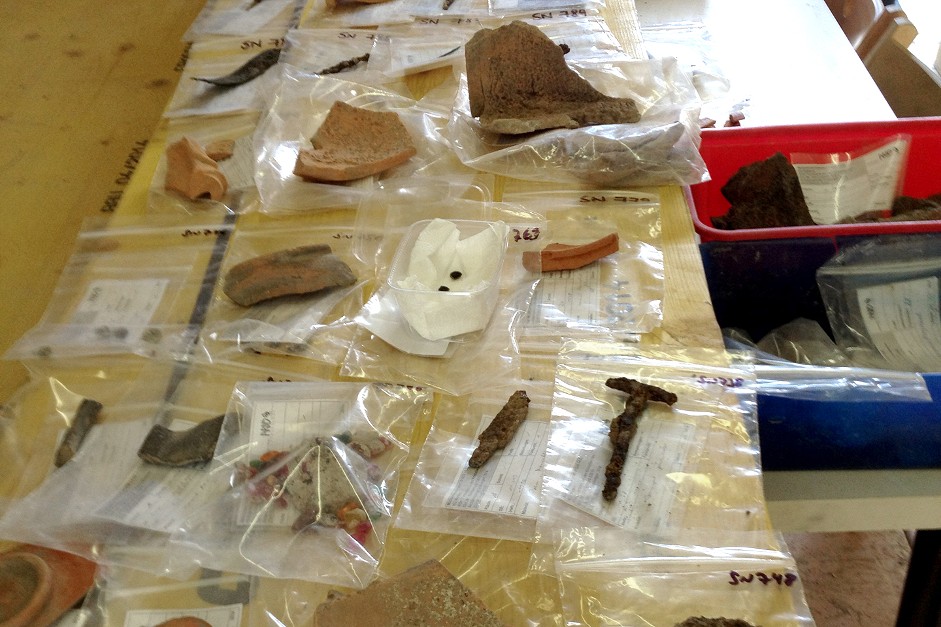
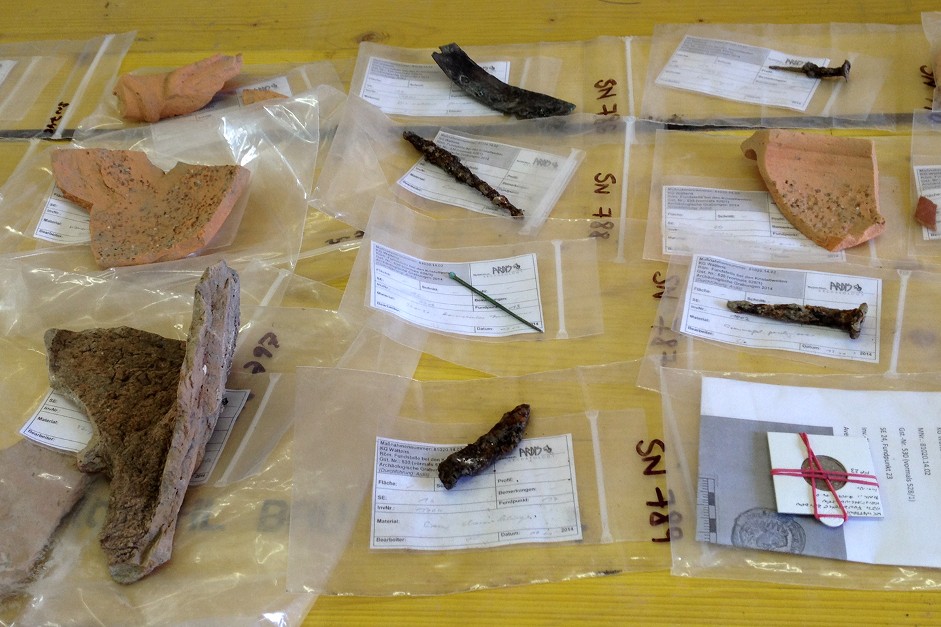
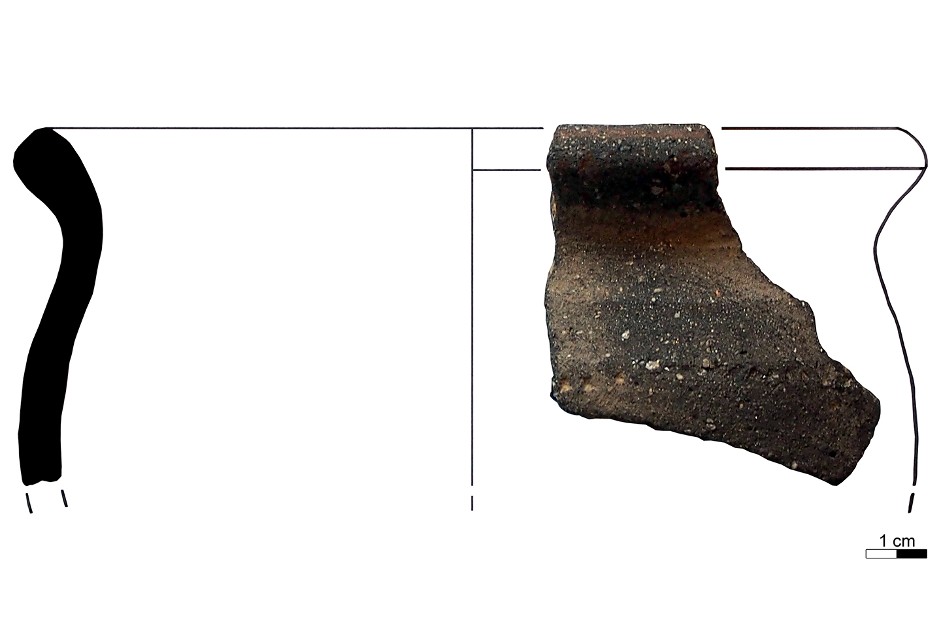
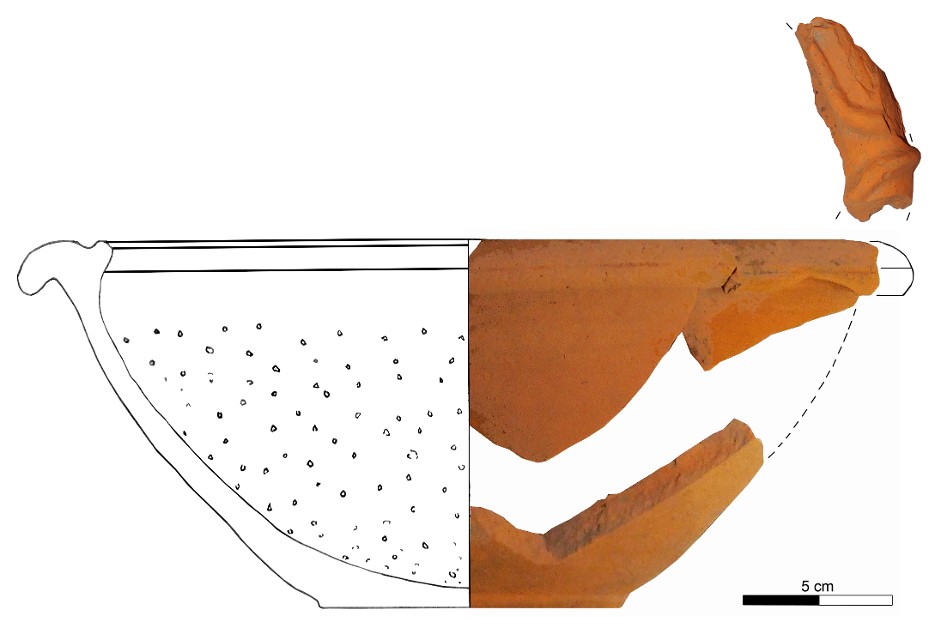
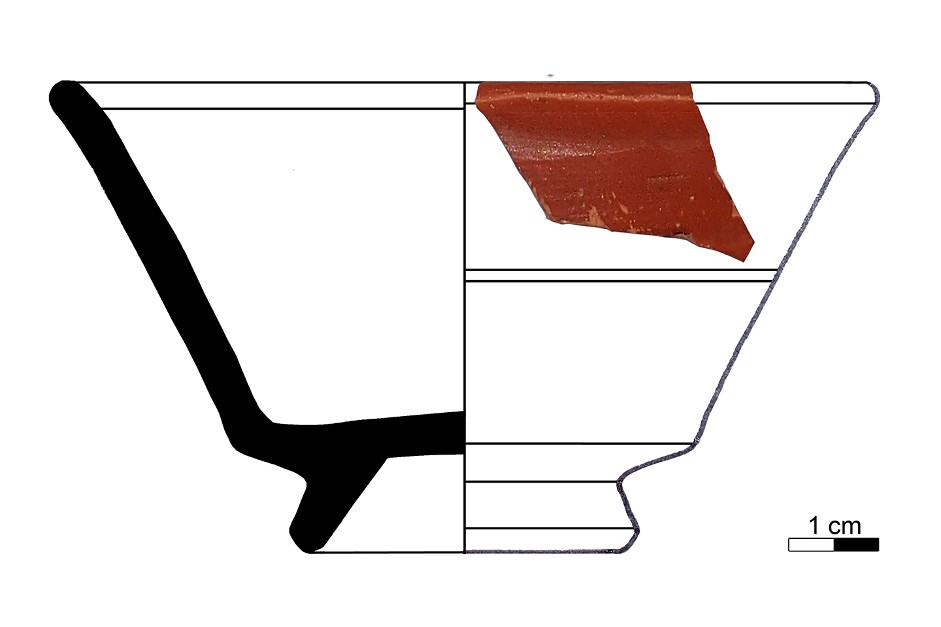
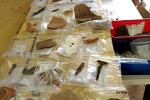
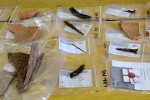
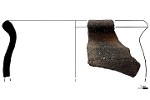
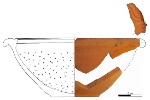
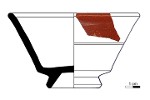
The archaeological excavations uncovered more than 2,400 individual finds, mainly dating back to Roman times. These treasures include fragments of simple, locally produced everyday dishes, but also of exquisite imported tableware, architectural ceramics, glass shards from vessels and window panes, food remnants in the form of animal bones, slag and metalworking debris, as well as iron tools, and equipment of various types. Individual items such as a gold-foil pendant and an ear spoon made from non-ferrous metal complete the showcase. Also on display are several reconstructed pieces: a mortar typical of Roman kitchenware, a ceramic item for everyday use, and an exquisitely wrought bowl. The highlight, however, is the trove of 702 Roman silver coins.
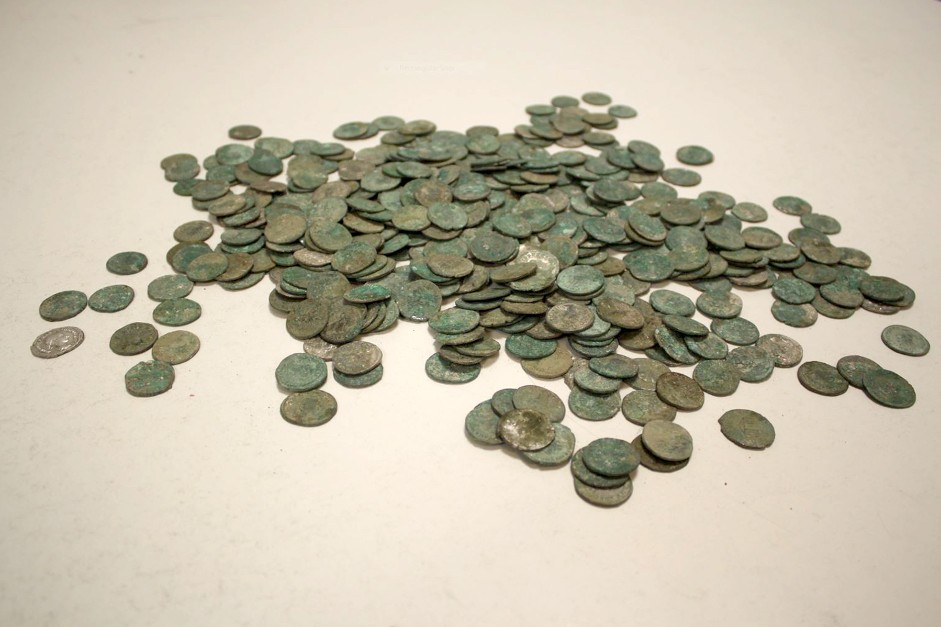
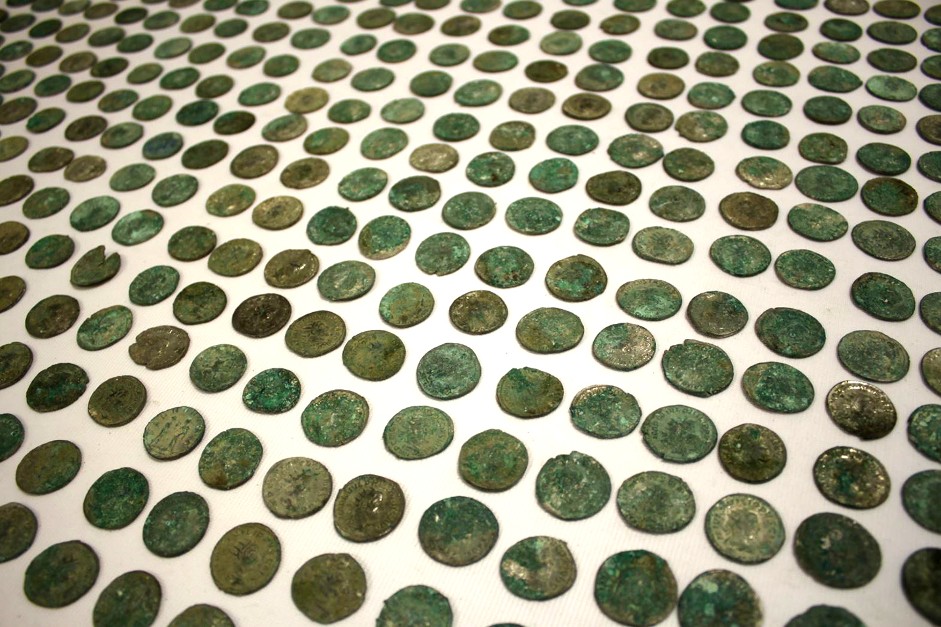
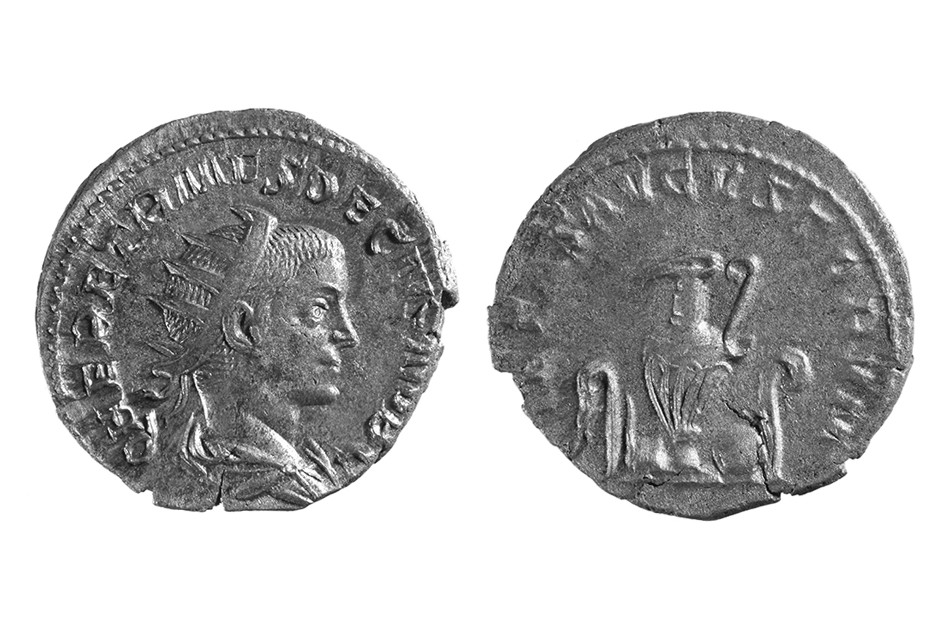
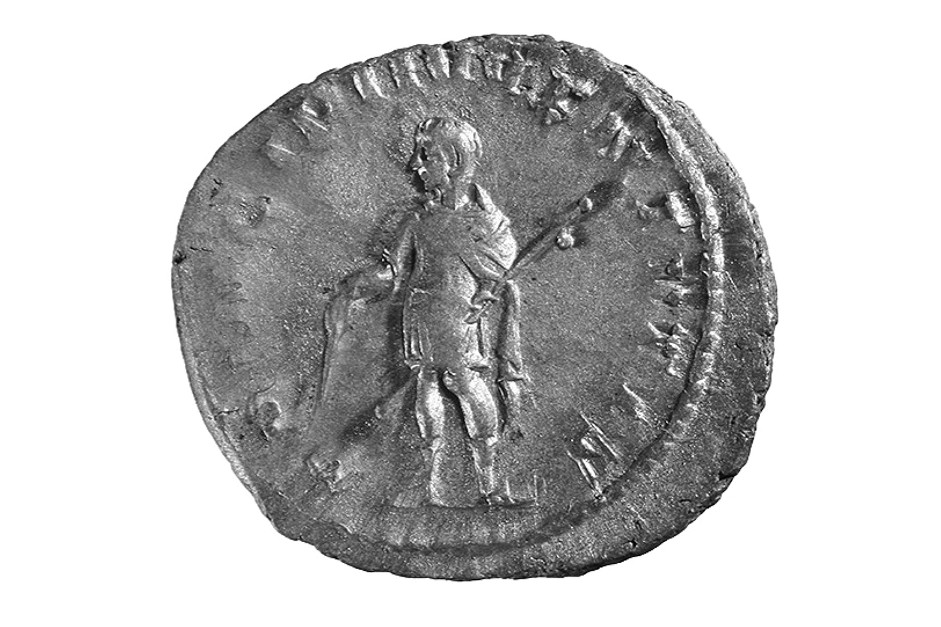
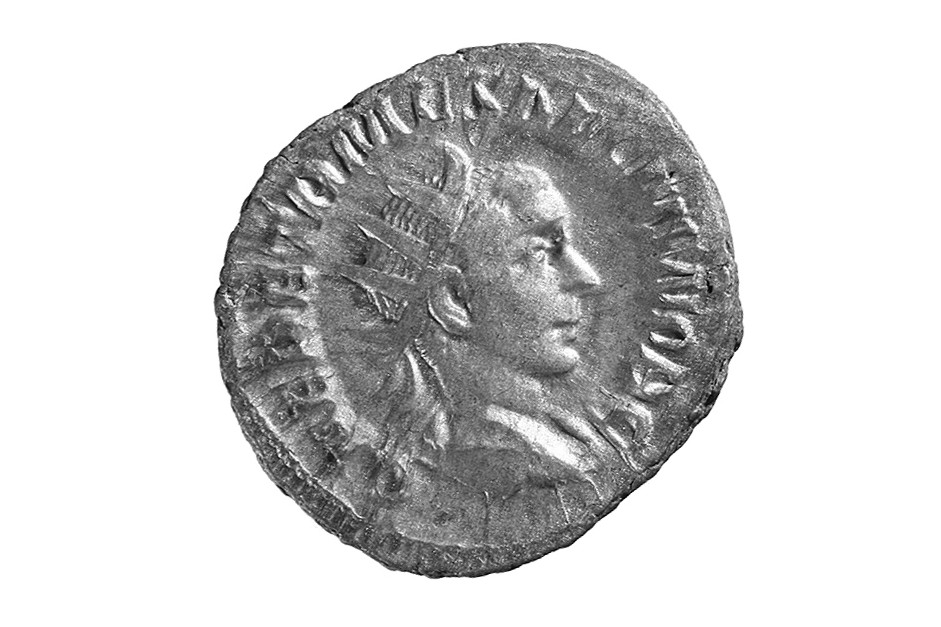
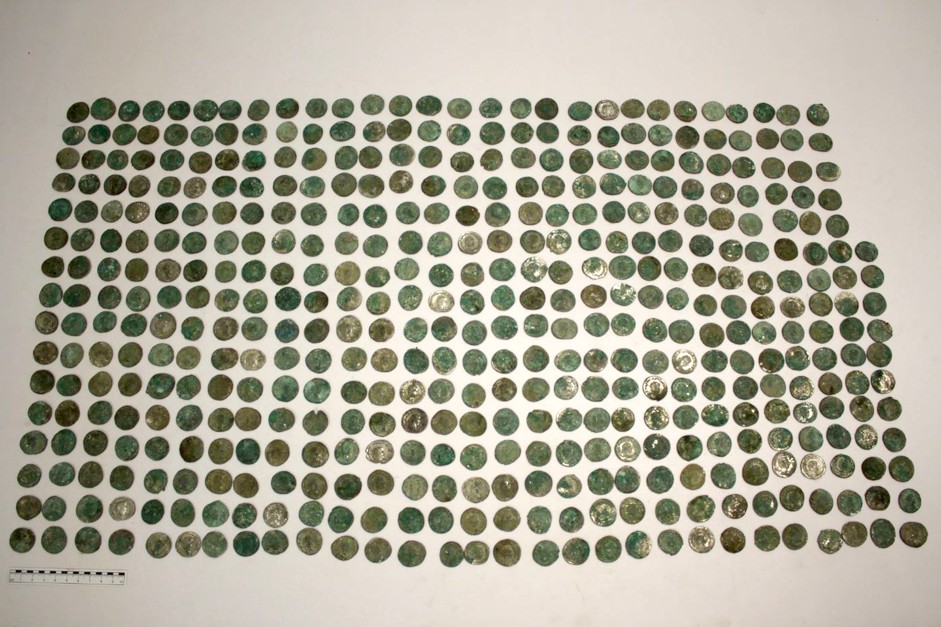
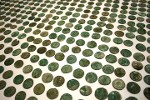
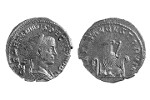
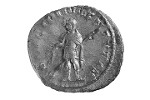
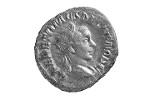
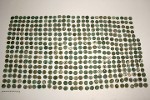
The discovery of these coins is one of the largest that has ever been made in Tyrol. The overwhelming majority of the coins comes from a mint in Rome; only a small portion comes from Milan, and a few from Antioch on the Orontes (Antakya, Turkey). The fact that the find does not include any older or extraordinary coins leads us to assume that this was money meant for immediate circulation.
Since coins were minted in large volumes and easily introduced into circulation, they were a common method of payment in the Roman Empire. However, coins were also an important means of communication for the emperors to tell the people of their claim to power, their deeds, and how much they cared about the Empire’s prosperity.