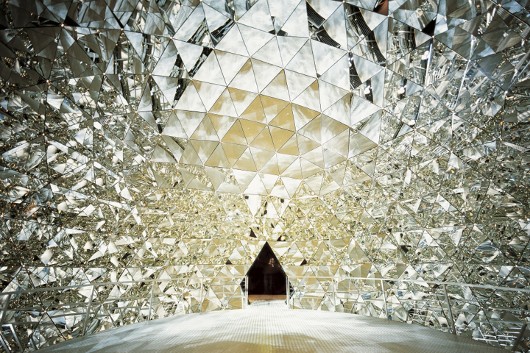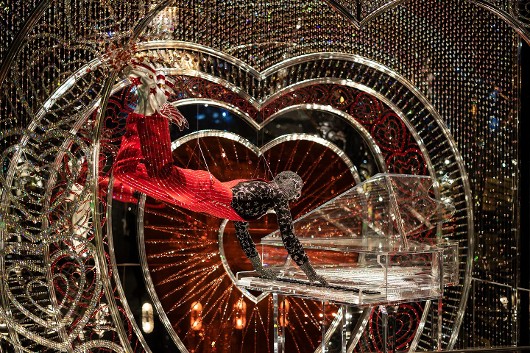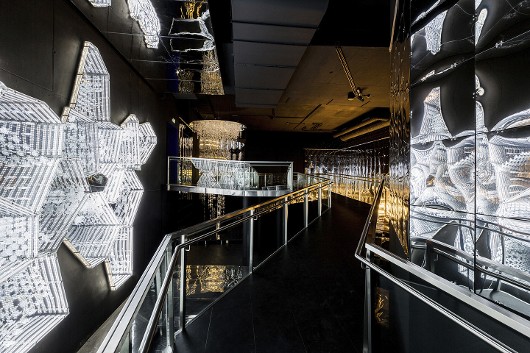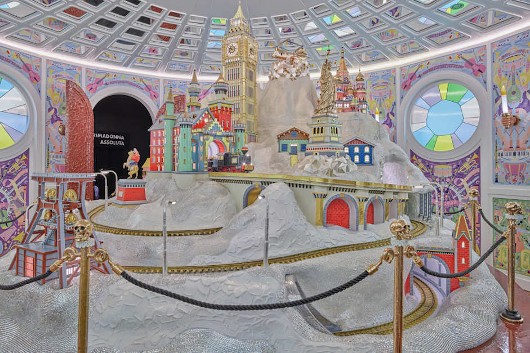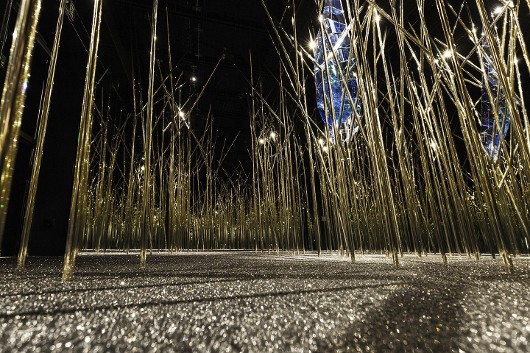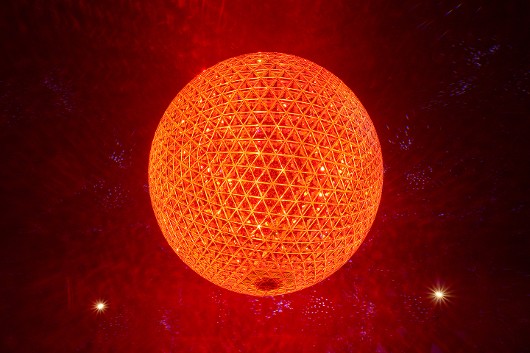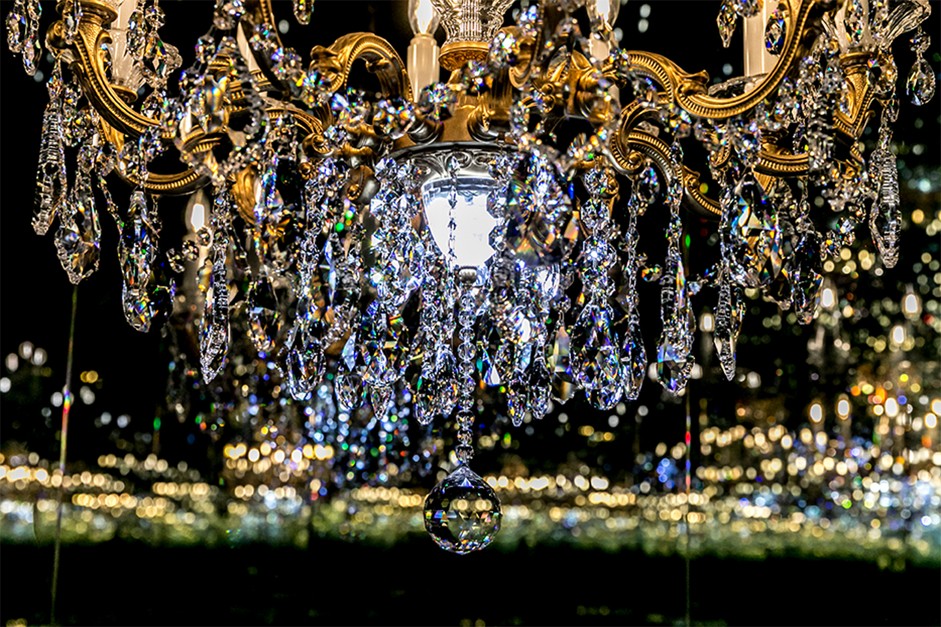
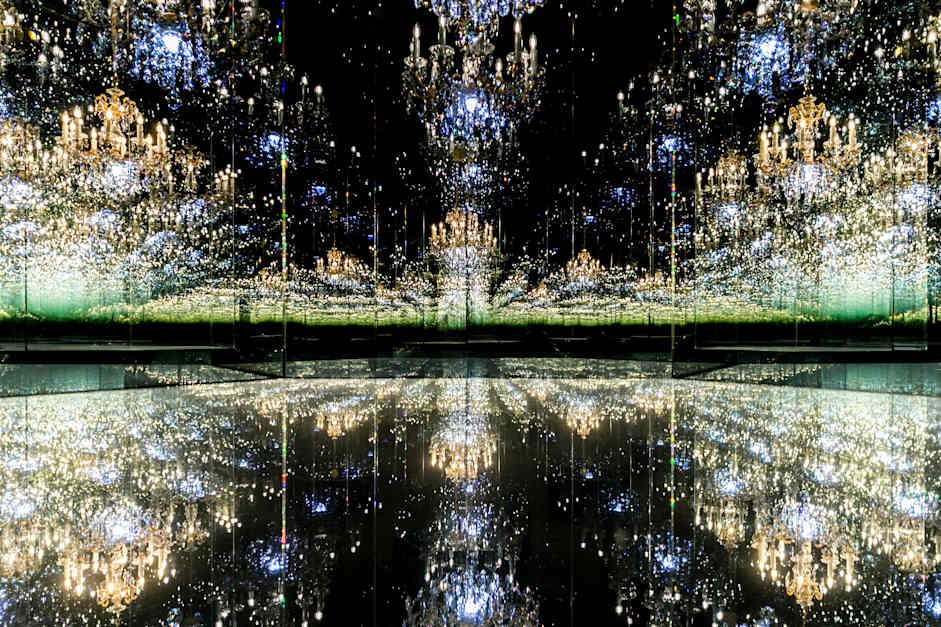
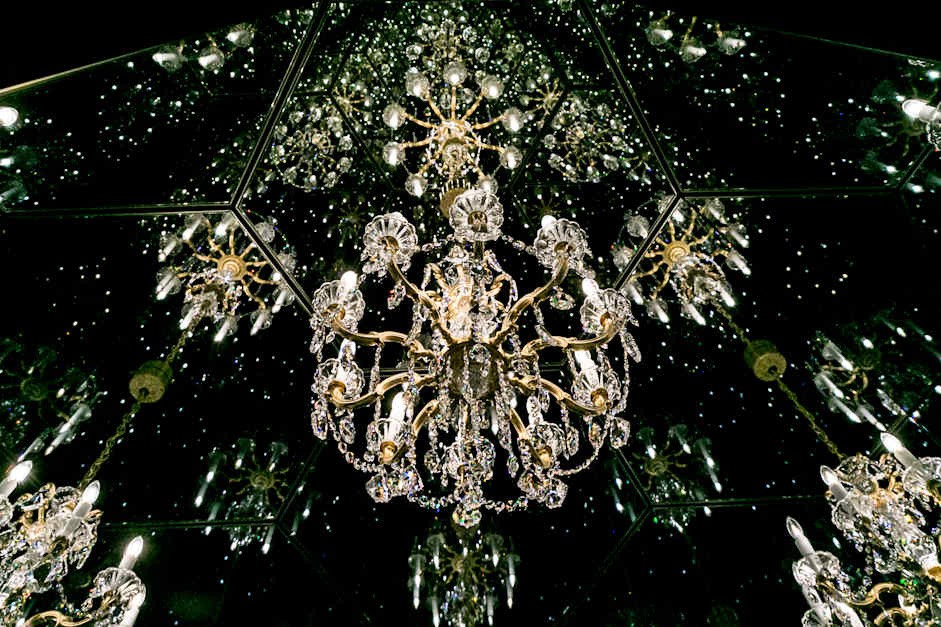
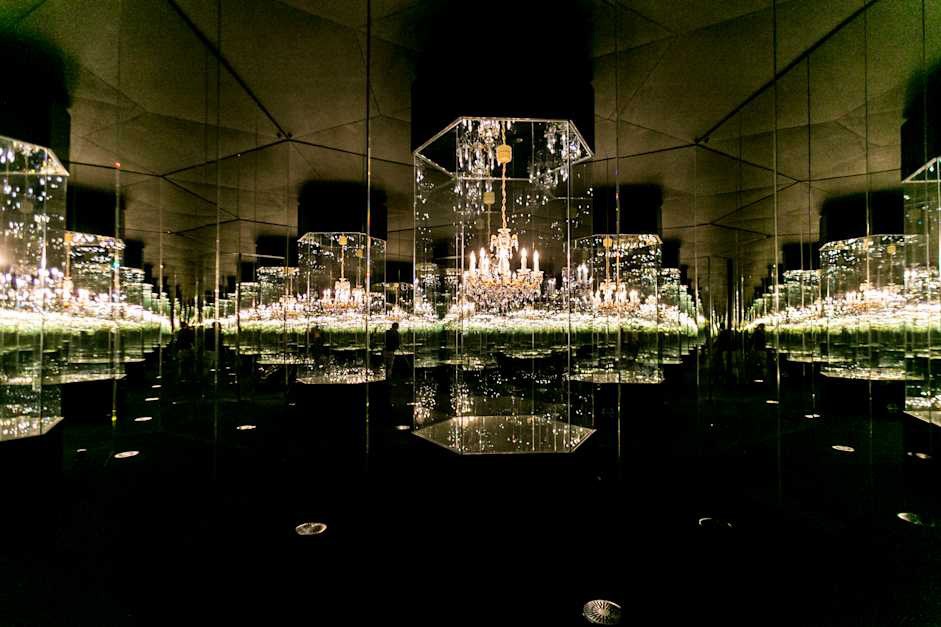
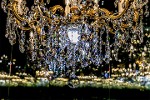
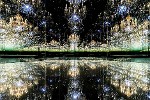
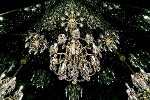
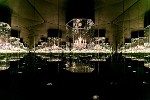
In this Infinity Mirror Room by Japanese artist Yayoi Kusama, you are enveloped by a sea of light and mirrors. A floating crystal chandelier unfolds a sparkling cosmos that multiplies into infinity across mirrored walls. As you immerse yourself in a meditative sphere, the boundaries between the real space you are in and the sphere you perceive dissolve. Enter “Chandelier of Grief” and be enchanted by the overwhelming beauty of the infinite space. This installation is one of four “Chandelier of Grief” Infinity Mirror Rooms and the only one in the world that is permanently open to the public. To give you the best possible experience, the number of guests in the room is limited to a maximum of six people at a time. Thank you for your understanding.
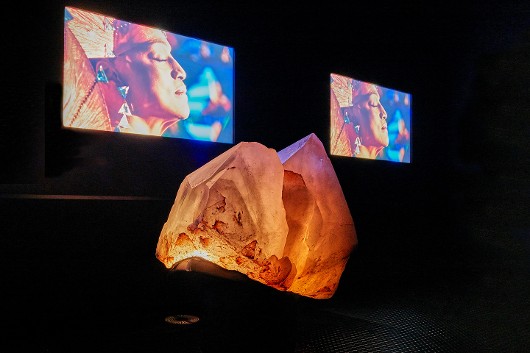
What connects the art of Yayoi Kusama to the world of crystals is the presence of ordered grids beneath the sparkling surface. Just as crystals have a complex structure at an atomic level, the artist also uses sophisticated grids in her works. Kusama draws her inspiration from the natural environment and the human psyche. The repetitive patterns and the multiplication of elements are reminiscent of the laws of nature. The central element of the installation is a mirrored room with a rotating crystal chandelier of the model La Scala from the trademark brand Schonbek, which is fitted with crystals from Swarovski.

The Japanese artist Yayoi Kusama was born in Nagano, Japan, in 1929 and is considered one of the most important creators of installation and performance art. Her work is characterized by the repetition of dots, lines, and net structures. Kusama began her career in Japan but moved to New York in the 1950s to join the international avant-garde. Her first Infinity Mirror Room – “Phalli’s Field” in 1965, combines her famous polka dots with a multitude of phallic shapes that are endlessly repeated in the mirrors. Kusama died in Tokyo on August 14, 2026. This work established her as a pioneer of installation art. Kusama’s work is closely linked to her personal history, in particular her experiences with hallucinations and mental illness. Since the 1970s, she had been living and working in Japan again, where she also owned her own museum.